Introduction
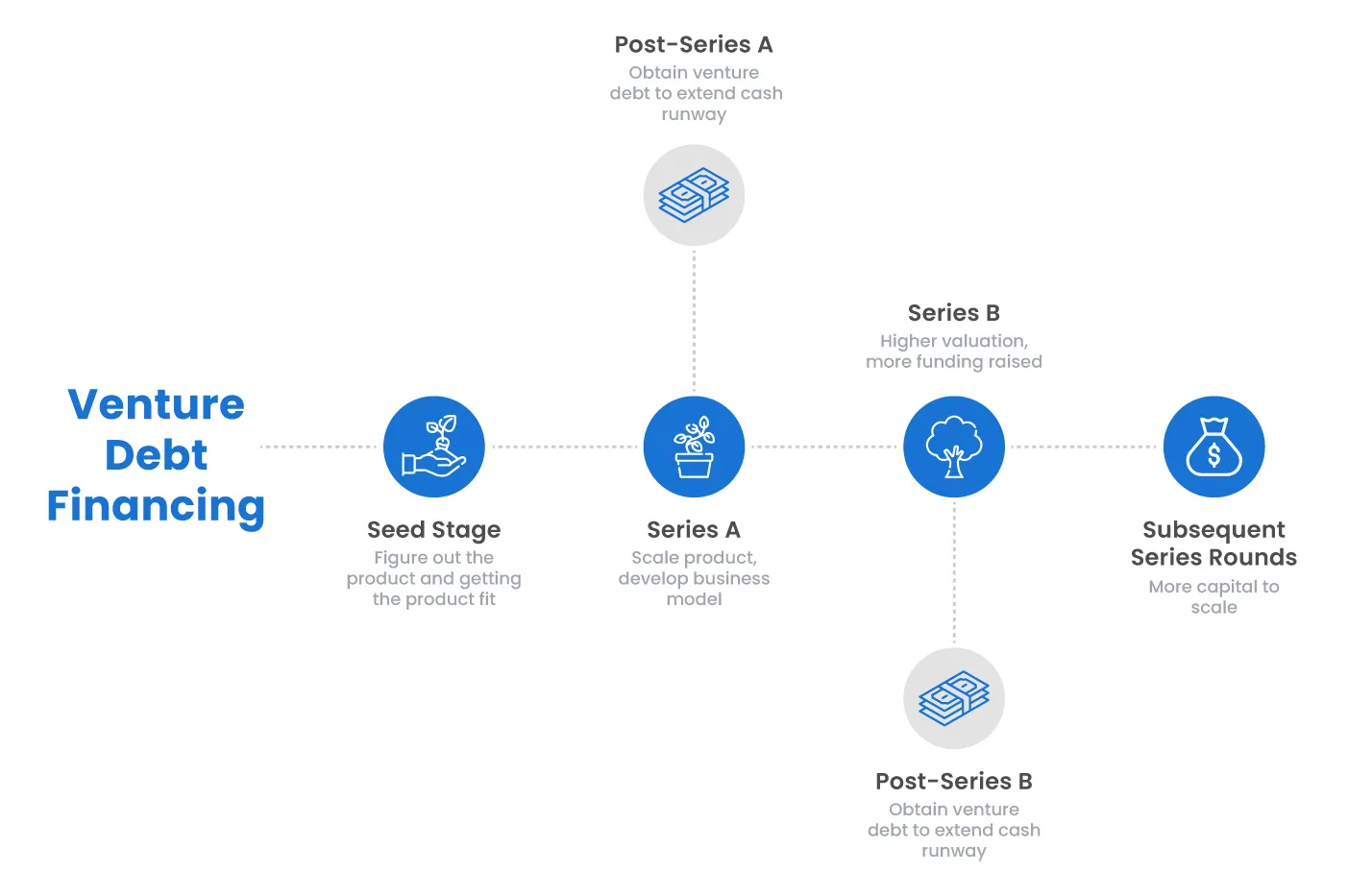
Venture Debt is an increasingly popular financing option for startups that want to raise capital without significant equity dilution. It is typically taken alongside or after equity funding and is offered by specialized venture debt funds and NBFCs. For Indian startups, venture debt helps extend runway, fund growth, manage working capital, and finance capital expenditure.
This guide explains the step-by-step process of raising venture debt, eligibility, documentation, costs, benefits, risks, and compliance requirements in a clear and practical manner.

4
What Is Venture Debt?
Venture Debt is a structured loan provided to venture-backed startups. Unlike traditional bank loans, it relies more on:
- Startup’s equity investors
- Business traction and growth
- Future fundraising capability
It usually includes:
- Term loan or working capital facility
- Warrants or small equity upside (optional)
- Fixed tenure and interest
Who Should Opt for Venture Debt?
Venture Debt is suitable if your startup:
- Has raised Seed, Series A, or Series B funding
- Has predictable revenues or strong growth metrics
- Wants to avoid equity dilution
- Needs capital for expansion, hiring, marketing, or CAPEX
Step-by-Step Process for Venture Debt
Step 1: Assess Funding Requirement
Determine:
- Exact capital requirement
- Purpose (growth, runway extension, asset purchase)
- Preferred tenure and repayment capacity
Prepare a use-of-funds plan to justify the loan.
Step 2: Check Eligibility
Most venture debt providers evaluate:
- Prior equity funding from reputed VCs/angels
- Revenue traction or strong unit economics
- Promoter credibility and governance
- Business scalability and industry outlook
Step 3: Prepare Key Documents
Commonly required documents include:
- Certificate of Incorporation
- Shareholding pattern and cap table
- Pitch deck and business plan
- Financial statements and projections
- Term sheets of previous equity rounds
- Bank statements
- KYC of founders and directors
Step 4: Approach Venture Debt Lenders
You may approach:
- Venture debt funds
- NBFCs focused on startups
- Banks with startup-focused products
Applications can be made directly or via advisors to improve negotiation outcomes.
Step 5: Term Sheet Discussion
Key terms negotiated at this stage:
- Loan amount
- Interest rate
- Tenure and moratorium
- Warrants or equity kicker (if any)
- Security or charge on assets
- Covenants and reporting obligations
Careful review is critical before acceptance.
Step 6: Due Diligence
The lender conducts:
- Financial due diligence
- Legal and compliance checks
- Review of investor agreements
- Verification of statutory filings
This phase ensures risk assessment before disbursal.
Step 7: Legal Documentation
Execution of agreements such as:
- Loan agreement
- Security documents
- Warrant agreements (if applicable)
- Board and shareholder resolutions
All documents must comply with applicable laws.
Step 8: Disbursement of Funds
Once documentation is completed:
- Funds are disbursed in one or multiple tranches
- Conditions precedent must be fulfilled
- Funds are credited to the company account
Step 9: Post-Disbursement Compliance
After receiving venture debt:
- Maintain periodic financial reporting
- Adhere to covenants
- Make timely EMI payments
- Update ROC filings if required
Key Benefits of Venture Debt
- Minimal equity dilution
- Faster access to capital
- Improves return on equity
- Extends cash runway
- Flexible repayment structures
Risks and Considerations
- Fixed repayment obligation
- Higher interest compared to bank loans
- Warrants may dilute equity slightly
- Strict covenants may apply
Proper cash flow planning is essential.
Tax and Accounting Treatment
- Interest paid is generally tax-deductible
- Warrants may have valuation and tax implications
- Proper accounting under applicable standards is required
Professional advice is recommended.
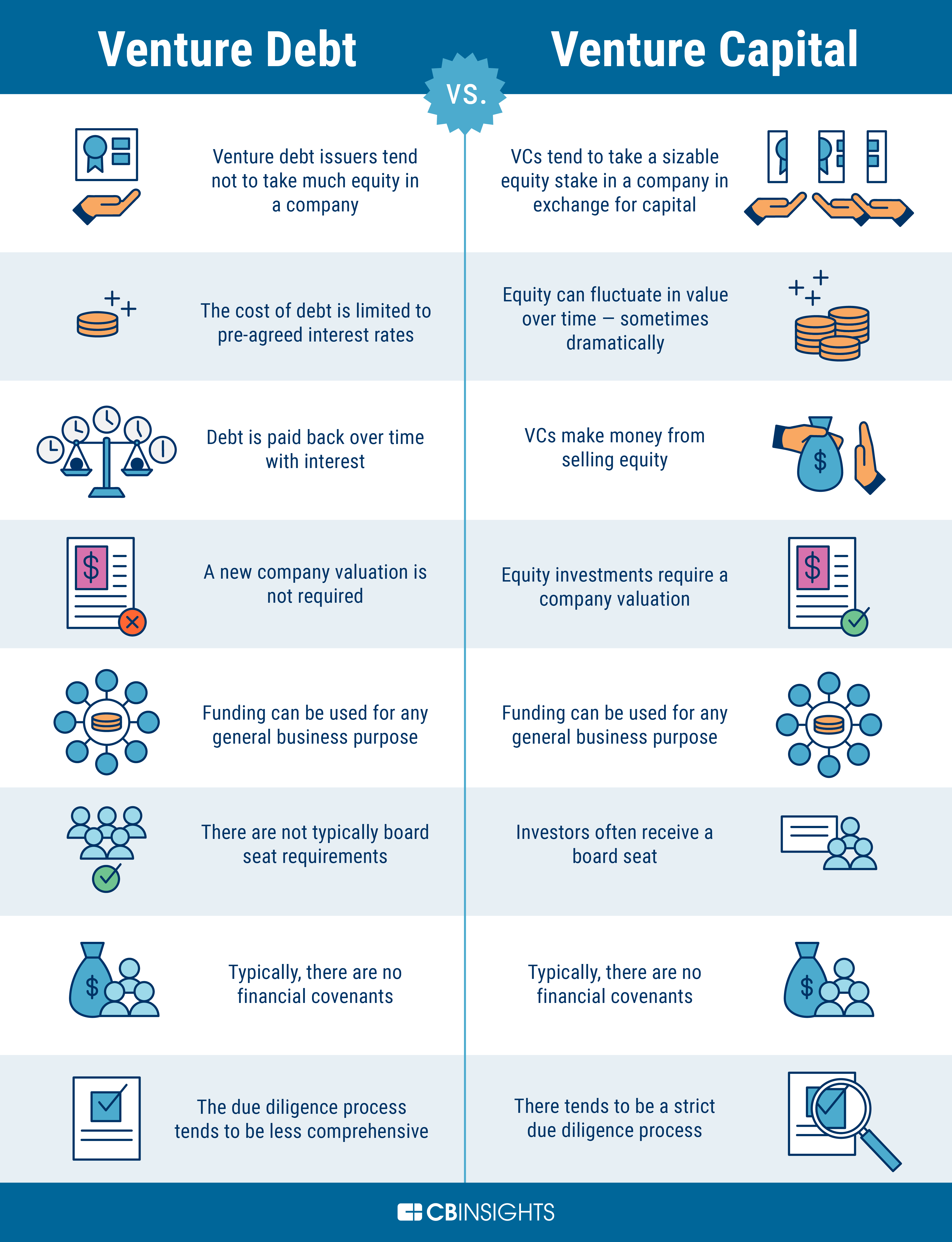
Venture Debt vs Equity Funding
| Parameter | Venture Debt | Equity Funding |
|---|---|---|
| Ownership Dilution | Low | High |
| Cost | Interest-based | Ownership-based |
| Control | Retained | Shared |
| Repayment | Mandatory | Not required |
| Speed | Faster | Slower |
Conclusion
Venture debt is a powerful financing tool for startups looking to scale efficiently while preserving ownership. When structured correctly, it complements equity funding and strengthens financial flexibility. However, it must be used with disciplined cash flow management and clear growth objectives.
Disclaimer
This article is for informational purposes only and does not constitute financial, legal, or investment advice. Venture debt terms, eligibility, and regulations may vary based on lender policies and applicable laws. Readers are advised to consult qualified professionals before making any funding or financial decisions.