Category: Business Compliances

  • Trademark & Patent Registration: Step-by-Step Guide

    What Is a Trademark?

    A trademark protects:

    • Brand name
    • Logo
    • Tagline
    • Symbol or design

    It distinguishes your goods or services from competitors.


    Step 1: Trademark Search

    Conduct a public search to ensure:

    • No identical or similar trademark exists
    • Correct trademark class is identified

    This reduces rejection risk.


    Step 2: Select Trademark Class

    Trademarks are categorized under 45 classes:

    • Classes 1–34: Goods
    • Classes 35–45: Services

    Correct classification is crucial.


    Step 3: Prepare Application

    Prepare:

    • Applicant details
    • Trademark logo (if applicable)
    • Description of goods/services
    • Usage date (used or proposed to be used)

    Step 4: File Trademark Application

    File the application online with:

    • Government filing fee
    • Digital signature or Aadhaar-based verification

    Application number is generated instantly.


    Step 5: Examination by Trademark Office

    The Trademark Registry:

    • Examines legal and technical compliance
    • Issues examination report (if objections exist)

    Step 6: Reply to Objections

    If objections are raised:

    • Submit written reply within deadline
    • Attend hearing if required

    Step 7: Publication & Registration

    If accepted:

    • Trademark is published in the Journal
    • If no opposition is filed, registration certificate is issued

    Trademark validity: 10 years, renewable indefinitely.


    Part B: Patent Registration – Step-by-Step Process

    What Is a Patent?

    A patent protects:

    • New inventions
    • Products or processes
    • Technical solutions

    Patent protection grants exclusive commercial rights.


    Step 1: Patentability Assessment

    Check whether the invention is:

    • Novel
    • Involves inventive step
    • Industrially applicable

    Non-patentable inventions are excluded by law.


    Step 2: Prior Art Search

    Conduct a patent search to:

    • Identify existing similar inventions
    • Assess uniqueness

    Step 3: Draft Patent Specification

    Prepare:

    • Provisional specification (optional)
    • Complete specification with claims, drawings, and abstract

    Professional drafting is critical.


    Step 4: File Patent Application

    Submit application online with:

    • Applicant and inventor details
    • Government fees
    • Specification documents

    Application number and filing date are allotted.


    Step 5: Publication of Application

    Patent application is published:

    • After 18 months (or early publication request)

    Step 6: Request for Examination

    File Request for Examination (RFE) to initiate review.


    Step 7: Examination & Response

    Patent Office:

    • Issues examination report
    • Applicant responds to objections
    • Hearings may be conducted

    Step 8: Grant of Patent

    If objections are resolved:

    • Patent is granted and published
    • Validity: 20 years from filing date

    Annual renewal fees apply.


    Key Benefits of Trademark & Patent Registration

    • Legal ownership and protection
    • Brand and innovation security
    • Commercial licensing opportunities
    • Enhanced valuation and credibility
    • Protection against infringement

    Common Mistakes to Avoid

    • Skipping trademark or patent search
    • Incorrect class selection
    • Poorly drafted patent claims
    • Missing deadlines or renewals

    Conclusion

    Trademark and Patent registrations are strategic assets for businesses aiming for long-term growth and innovation protection. While trademarks secure brand identity, patents safeguard technical inventions. A structured, compliant approach ensures faster approval and enforceable rights.


    Disclaimer

    This article is for informational purposes only and does not constitute legal or professional advice. Trademark and patent registration processes, eligibility, timelines, and approvals are subject to applicable laws and government discretion. Readers are advised to consult qualified IP professionals before filing or relying on any intellectual property registration.
  • How to Apply for Tax Exemption in India: Step Guide

    What Is Tax Exemption?

    Tax exemption refers to legal relief from paying income tax on specified income, activities, or entities as allowed under the Income Tax Act, 1961. Common tax exemptions include:

    • Startup tax exemption
    • NGO and trust tax exemption
    • Section-based exemptions (such as 10, 11, 12, 80)

    Each exemption requires separate application and approval.


    Who Can Apply for Tax Exemption?

    Tax exemption can be applied by:

    • DPIIT-recognized startups
    • Trusts and societies
    • Section 8 companies
    • Charitable and religious institutions
    • Educational and medical institutions

    Eligibility depends on the specific section under which exemption is claimed.


    Step-by-Step Process to Apply for Tax Exemption

    Step 1: Identify Applicable Tax Exemption

    Determine the correct exemption category based on:

    • Nature of entity
    • Purpose and activities
    • Applicable section of Income Tax Act

    Choosing the wrong section may lead to rejection.


    Step 2: Ensure Eligibility Conditions

    Before applying, confirm:

    • Proper incorporation or registration
    • No prohibited commercial activity (if applicable)
    • Compliance with turnover or age limits
    • Valid registrations (PAN, GST if applicable)

    Eligibility must be met before application.


    Step 3: Prepare Mandatory Documents

    Commonly required documents include:

    • PAN of entity
    • Certificate of incorporation or registration
    • Founding documents (MOA, trust deed, bye-laws)
    • Financial statements and projections
    • Activity note and objectives
    • Bank account details

    Document accuracy is critical.


    Step 4: Register on Income Tax Portal

    Log in to the Income Tax e-filing portal using:

    • Entity PAN
    • Authorized signatory credentials
    • Valid DSC or Aadhaar-based verification

    All exemption applications are filed online.


    Step 5: File Online Application Form

    Submit the relevant online form as applicable:

    • Enter entity details and activity description
    • Upload supporting documents
    • Verify application digitally

    Forms differ based on exemption type.


    Step 6: Respond to Queries or Notices

    The Income Tax Department may:

    • Seek clarification or additional documents
    • Issue online notices

    Timely response ensures faster approval.


    Step 7: Approval or Rejection Order

    Upon review:

    • Tax exemption approval is issued digitally
    • Approval certificate/order is downloadable
    • Rejection is communicated with reasons

    Approval timelines vary by case.


    Post-Approval Compliance Requirements

    After receiving tax exemption:

    • File annual Income Tax Returns on time
    • Maintain books of accounts
    • Use funds strictly for approved purposes
    • File audit reports if applicable

    Non-compliance may lead to cancellation.


    Benefits of Applying for Tax Exemption

    • Significant tax savings
    • Improved cash flow
    • Increased credibility with donors and investors
    • Legal compliance and peace of mind

    Common Reasons for Rejection

    • Incomplete or incorrect documentation
    • Activities not matching stated objectives
    • Non-compliance history
    • Late or improper responses to notices

    Professional review reduces rejection risk.


    Conclusion

    Applying for tax exemption is a strategic and compliance-driven process that offers long-term financial benefits when done correctly. Whether you are a startup or a nonprofit entity, understanding eligibility, documentation, and post-approval responsibilities is essential to retain exemption benefits and avoid penalties.


    Disclaimer

    This article is for informational purposes only and does not constitute legal, tax, or professional advice. Tax exemption eligibility, procedures, and approvals are subject to applicable laws, rules, and departmental discretion. Readers are advised to consult qualified professionals before applying for or relying on any tax exemption.

  • GeM Portal Registration: Step-by-Step Guide in India

    What Is GeM Portal?

    GeM (Government e-Marketplace) is a one-stop digital platform where:

    • Government departments buy goods and services
    • Registered sellers list and sell their offerings
    • Procurement happens transparently and digitally

    Both manufacturers and service providers can register on GeM.


    Who Can Register on GeM Portal?

    The following entities are eligible:

    • Proprietorship firms
    • Partnership firms
    • LLPs
    • Private Limited Companies
    • Public Limited Companies
    • Trusts and Societies (for eligible services)

    Step-by-Step Process for GeM Portal Registration

    Step 1: Prepare Required Information

    Keep the following ready:

    • PAN of business and proprietor/directors
    • Aadhaar linked with mobile number
    • Active email ID and mobile number
    • Bank account details
    • GST registration details (if applicable)

    Step 2: Visit GeM Portal and Create Seller Account

    Register on the GeM portal using:

    • Aadhaar-based OTP authentication
    • PAN verification
    • Business details entry

    The Aadhaar holder becomes the Primary User.


    Step 3: Enter Business and Organization Details

    Provide:

    • Legal name of business
    • Type of organization
    • Registered address
    • Date of incorporation
    • MSME/Udyam details (if applicable)

    Ensure consistency with official records.


    Step 4: Upload Mandatory Documents

    Upload required documents such as:

    • PAN card
    • GST registration certificate (if applicable)
    • Bank account proof (cancelled cheque)
    • Address proof

    Document verification is system-driven.


    Step 5: Add Product or Service Categories

    After account activation:

    • Select relevant product or service categories
    • Map offerings to GeM-approved categories
    • Provide technical specifications and pricing

    Only approved categories can be listed.


    Step 6: Brand & OEM Validation (If Applicable)

    For manufacturers:

    • Brand and OEM authorization is required
    • Upload brand ownership or authorization documents

    This step enables listing under own brand.


    Step 7: Account Verification and Activation

    GeM performs:

    • Aadhaar and PAN validation
    • Bank account verification
    • GSTIN validation (where applicable)

    Once approved, seller account becomes active.


    Benefits of GeM Portal Registration

    • Direct access to government buyers
    • No middlemen or commission
    • Transparent pricing and bidding
    • Timely payments through GeM
    • Increased credibility and visibility

    Post-Registration Compliance on GeM

    Registered sellers must:

    • Update product pricing and specifications regularly
    • Comply with order fulfillment timelines
    • Maintain quality standards
    • Respond to bids and buyer queries

    Non-compliance may lead to suspension.


    Common Issues Faced During Registration

    • Aadhaar not linked with mobile
    • Mismatch in PAN or GST details
    • Incorrect business classification
    • Incomplete product specifications

    Professional assistance helps avoid delays.


    Conclusion

    GeM Portal Registration is a powerful opportunity for businesses to expand into government procurement with transparency and ease. With correct documentation and proper category selection, sellers can unlock large-volume orders and long-term growth through the GeM ecosystem.


    Disclaimer

    This article is for informational purposes only and does not constitute legal, tax, or professional advice. GeM portal rules, eligibility, and processes are subject to change as per government guidelines. Readers are advised to consult qualified professionals before registering or listing on the GeM portal.

  • Startup Recognition under DPIIT: Step-by-Step Process

    What Is DPIIT Startup Recognition?

    DPIIT Startup Recognition is an official government recognition provided to startups that:

    • Are innovation-driven
    • Aim to create employment or wealth
    • Are incorporated as a Private Limited Company, LLP, or Partnership Firm

    Once approved, the startup receives a Startup Recognition Certificate.


    Eligibility Criteria for DPIIT Startup Recognition

    To qualify, a startup must meet all the following conditions:

    • Incorporated in India (Pvt Ltd, LLP, or Partnership)
    • Not older than 10 years from incorporation
    • Annual turnover not exceeding ₹100 crore in any financial year
    • Working towards innovation, improvement, or scalability
    • Not formed by splitting or reconstructing an existing business

    Step-by-Step Process for Startup Recognition under DPIIT

    Step 1: Incorporate the Startup

    Ensure your business is incorporated as:

    • Private Limited Company
    • Limited Liability Partnership (LLP)
    • Registered Partnership Firm

    Valid incorporation documents are mandatory.


    Step 2: Register on Startup India Portal

    Create an account on the Startup India portal using:

    • Founder’s name and email ID
    • Mobile number (OTP verification)

    This account will be used for all future filings.


    Step 3: Fill DPIIT Recognition Application

    Log in and complete the Startup Recognition form by providing:

    • Entity name and incorporation details
    • PAN and registered address
    • Industry and sector classification
    • Details of directors/partners

    Accuracy is critical to avoid rejection.


    Step 4: Upload Mandatory Documents

    Upload the following documents:

    • Certificate of Incorporation or Registration
    • PAN of the entity
    • Brief write-up on innovation or scalability
    • Details of funding (if any)

    The innovation write-up is a key evaluation factor.


    Step 5: Self-Certification and Declaration

    The startup must self-certify that:

    • It meets DPIIT eligibility conditions
    • Information provided is true and correct
    • It is not formed by business restructuring

    False declarations may lead to cancellation.


    Step 6: Submit Application

    After verification:

    • Submit the application online
    • No government fee is charged
    • A recognition number is generated instantly

    Step 7: DPIIT Examination and Approval

    DPIIT reviews the application and documents.
    If satisfied:

    • Startup Recognition Certificate is issued digitally
    • Certificate can be downloaded from the portal

    Approval timelines may vary.


    Benefits of DPIIT Startup Recognition

    1. Income Tax Exemption

    Eligible startups can apply for 3-year income tax exemption under Section 80-IAC (subject to approval).

    2. Angel Tax Exemption

    Exemption from angel tax under Section 56(2)(viib), subject to conditions.

    3. Government Funding & Schemes

    Access to:

    • Startup India Seed Fund
    • Government tenders with relaxed criteria
    • Credit guarantee schemes

    4. Ease of Compliance

    • Self-certification under labor laws
    • Relaxation under environmental laws
    • Faster IP registrations with rebates

    Post-Recognition Compliance

    After DPIIT recognition, startups must:

    • Maintain annual filings (ITR, ROC, GST if applicable)
    • Update portal details if business changes
    • Apply separately for tax exemptions when eligible

    Recognition does not replace statutory compliance.


    Common Reasons for Rejection

    • Weak or unclear innovation description
    • Incorrect incorporation details
    • Ineligible business activity
    • False declarations

    Professional review improves approval chances.


    Conclusion

    Startup Recognition under DPIIT is a foundation step for startups aiming to leverage India’s startup ecosystem. With proper documentation and a strong innovation narrative, recognition can unlock tax savings, funding access, and compliance benefits. A structured approach ensures smooth approval and long-term compliance.


    Disclaimer

    This article is intended for informational purposes only and does not constitute legal, tax, or professional advice. Startup recognition, benefits, and tax exemptions are subject to applicable laws, rules, and government approvals. Readers are advised to consult qualified professionals before taking any action.

  • Venture Debt Funding: Step-by-Step Guide for Startups

    Introduction

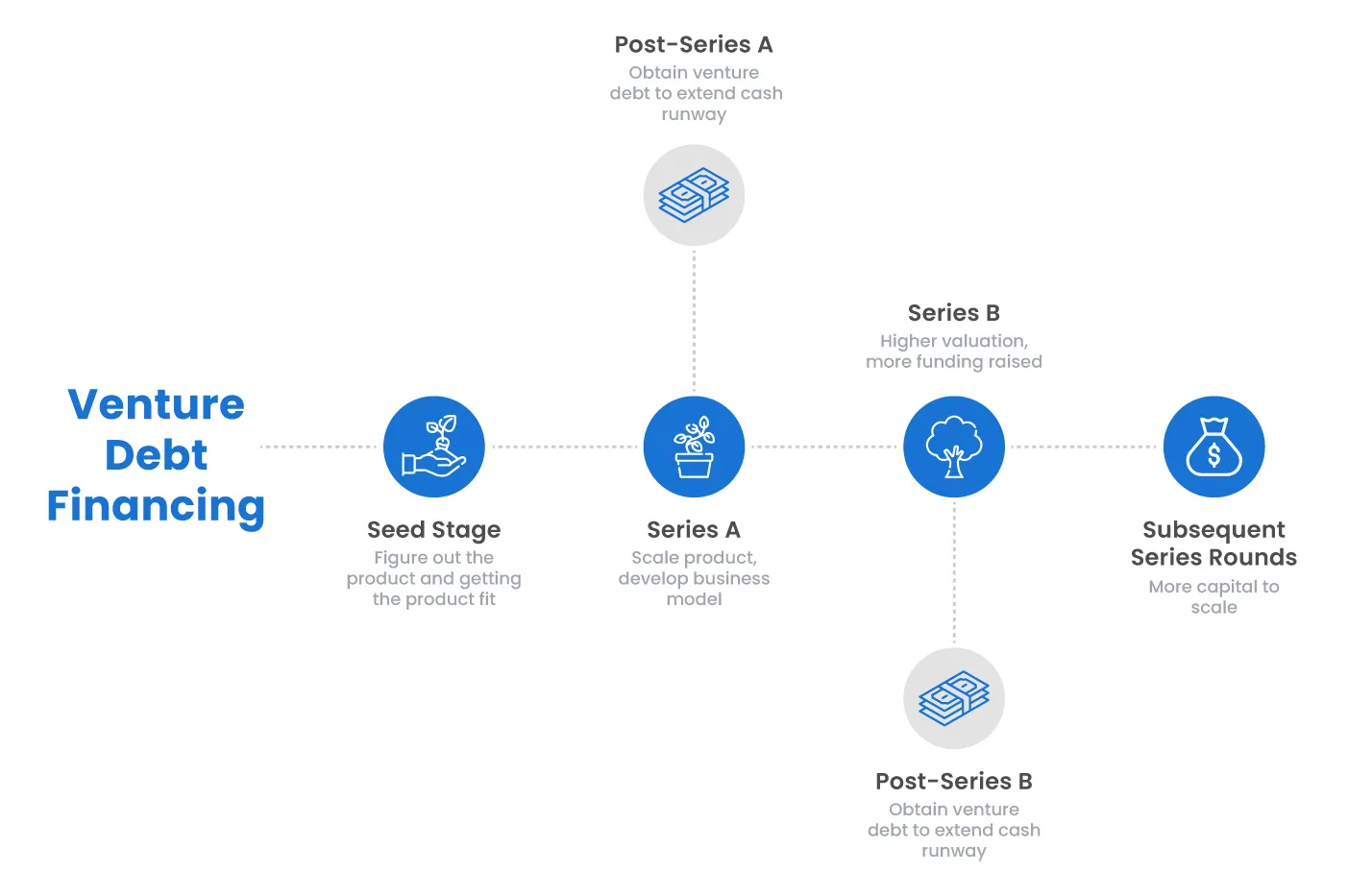
    Venture Debt is an increasingly popular financing option for startups that want to raise capital without significant equity dilution. It is typically taken alongside or after equity funding and is offered by specialized venture debt funds and NBFCs. For Indian startups, venture debt helps extend runway, fund growth, manage working capital, and finance capital expenditure.

    This guide explains the step-by-step process of raising venture debt, eligibility, documentation, costs, benefits, risks, and compliance requirements in a clear and practical manner.


    https://cdn.prod.website-files.com/5a710020b54d350001949426/6745eef40d9b186ca93776c0_63e38e12d9d0de7830993c72_191.5.webp
    https://eqvista.com/wp-content/uploads/2022/04/image1-4.png
    https://research-assets.cbinsights.com/2020/11/03152349/venture-debt-capital-comparison-110320.png

    4


    What Is Venture Debt?

    Venture Debt is a structured loan provided to venture-backed startups. Unlike traditional bank loans, it relies more on:

    • Startup’s equity investors
    • Business traction and growth
    • Future fundraising capability

    It usually includes:

    • Term loan or working capital facility
    • Warrants or small equity upside (optional)
    • Fixed tenure and interest

    Who Should Opt for Venture Debt?

    Venture Debt is suitable if your startup:

    • Has raised Seed, Series A, or Series B funding
    • Has predictable revenues or strong growth metrics
    • Wants to avoid equity dilution
    • Needs capital for expansion, hiring, marketing, or CAPEX

    Step-by-Step Process for Venture Debt

    Step 1: Assess Funding Requirement

    Determine:

    • Exact capital requirement
    • Purpose (growth, runway extension, asset purchase)
    • Preferred tenure and repayment capacity

    Prepare a use-of-funds plan to justify the loan.


    Step 2: Check Eligibility

    Most venture debt providers evaluate:

    • Prior equity funding from reputed VCs/angels
    • Revenue traction or strong unit economics
    • Promoter credibility and governance
    • Business scalability and industry outlook

    Step 3: Prepare Key Documents

    Commonly required documents include:

    • Certificate of Incorporation
    • Shareholding pattern and cap table
    • Pitch deck and business plan
    • Financial statements and projections
    • Term sheets of previous equity rounds
    • Bank statements
    • KYC of founders and directors

    Step 4: Approach Venture Debt Lenders

    You may approach:

    • Venture debt funds
    • NBFCs focused on startups
    • Banks with startup-focused products

    Applications can be made directly or via advisors to improve negotiation outcomes.


    Step 5: Term Sheet Discussion

    Key terms negotiated at this stage:

    • Loan amount
    • Interest rate
    • Tenure and moratorium
    • Warrants or equity kicker (if any)
    • Security or charge on assets
    • Covenants and reporting obligations

    Careful review is critical before acceptance.


    Step 6: Due Diligence

    The lender conducts:

    • Financial due diligence
    • Legal and compliance checks
    • Review of investor agreements
    • Verification of statutory filings

    This phase ensures risk assessment before disbursal.


    Step 7: Legal Documentation

    Execution of agreements such as:

    • Loan agreement
    • Security documents
    • Warrant agreements (if applicable)
    • Board and shareholder resolutions

    All documents must comply with applicable laws.


    Step 8: Disbursement of Funds

    Once documentation is completed:

    • Funds are disbursed in one or multiple tranches
    • Conditions precedent must be fulfilled
    • Funds are credited to the company account

    Step 9: Post-Disbursement Compliance

    After receiving venture debt:

    • Maintain periodic financial reporting
    • Adhere to covenants
    • Make timely EMI payments
    • Update ROC filings if required

    Key Benefits of Venture Debt

    • Minimal equity dilution
    • Faster access to capital
    • Improves return on equity
    • Extends cash runway
    • Flexible repayment structures

    Risks and Considerations

    • Fixed repayment obligation
    • Higher interest compared to bank loans
    • Warrants may dilute equity slightly
    • Strict covenants may apply

    Proper cash flow planning is essential.


    Tax and Accounting Treatment

    • Interest paid is generally tax-deductible
    • Warrants may have valuation and tax implications
    • Proper accounting under applicable standards is required

    Professional advice is recommended.


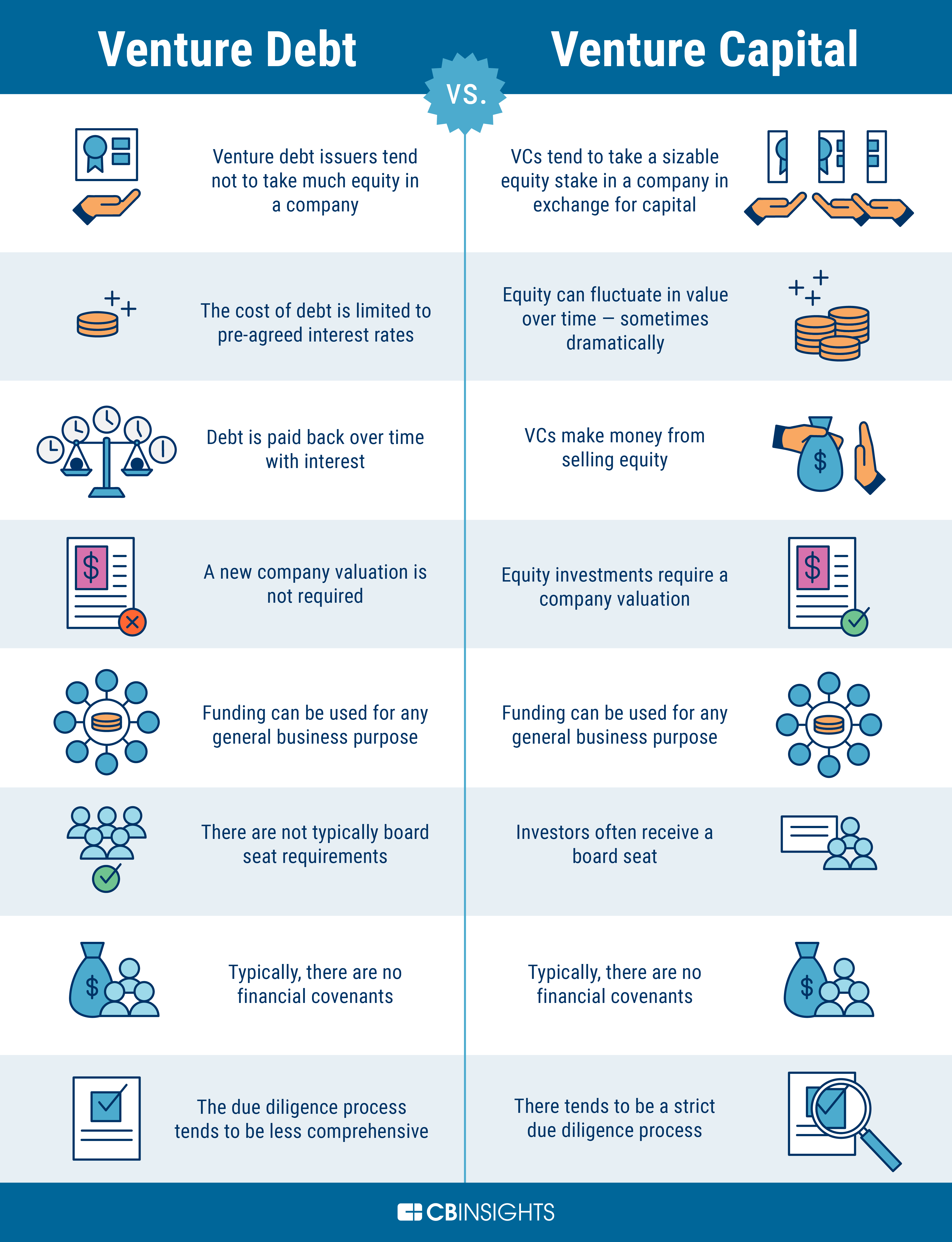
    Venture Debt vs Equity Funding

    ParameterVenture DebtEquity Funding
    Ownership DilutionLowHigh
    CostInterest-basedOwnership-based
    ControlRetainedShared
    RepaymentMandatoryNot required
    SpeedFasterSlower

    Conclusion

    Venture debt is a powerful financing tool for startups looking to scale efficiently while preserving ownership. When structured correctly, it complements equity funding and strengthens financial flexibility. However, it must be used with disciplined cash flow management and clear growth objectives.


    Disclaimer

    This article is for informational purposes only and does not constitute financial, legal, or investment advice. Venture debt terms, eligibility, and regulations may vary based on lender policies and applicable laws. Readers are advised to consult qualified professionals before making any funding or financial decisions.

  • Step by Step Venture Capital Funding for Startups


    Introduction

    Venture Capital (VC) funding is designed for startups with high-growth potential aiming to scale rapidly. Unlike early funding sources, venture capital brings large capital, strategic direction, governance, and global networks. However, VC funding also involves deeper scrutiny, structured processes, and long-term commitments.

    This Saving Mantra guide explains a clear, practical, and investor-ready step by step process to raise venture capital successfully and sustainably.


    Step 1: Understand What Venture Capital Is

    Venture capital funding involves:

    • Investment by professional VC firms
    • Equity dilution in exchange for growth capital
    • Focus on scalability and exits
    • Active investor involvement in strategy and governance

    VCs invest in businesses that can grow exponentially.


    Step 2: Check If Your Startup Is VC-Ready

    VCs typically look for:

    • Strong product-market fit
    • Rapid and scalable growth potential
    • Large addressable market
    • Clear competitive advantage
    • Strong founding and leadership team
    • Clean compliance and governance

    Not every startup is suitable for VC funding.


    Step 3: Decide the VC Funding Stage

    Common VC funding stages include:

    • Pre-Series A
    • Series A
    • Series B
    • Series C and beyond

    Each stage has different expectations for traction, revenue, and scale.


    Step 4: Define Funding Amount & Growth Milestones

    Before approaching VCs, clearly define:

    • Capital required
    • 18–24 months runway
    • Specific growth milestones
    • Use of funds (expansion, hiring, tech, marketing)

    VCs fund growth plans, not vague ideas.


    Step 5: Prepare a VC-Grade Pitch Deck

    A VC pitch deck should include:

    • Problem and scalable solution
    • Market size and expansion opportunity
    • Product and technology advantage
    • Traction and growth metrics
    • Revenue model and unit economics
    • Competitive landscape
    • Team and execution strength
    • VC funding ask and roadmap

    Data-driven storytelling is critical.


    Step 6: Build Strong Financials & Metrics

    VCs focus on:

    • Revenue growth rate
    • Unit economics
    • Customer acquisition cost (CAC)
    • Lifetime value (LTV)
    • Burn rate and runway
    • Gross margins

    Strong metrics drive valuation.


    Step 7: Shortlist the Right VC Firms

    Do not approach every VC.

    Shortlist based on:

    • Sector focus
    • Investment stage
    • Average ticket size
    • Portfolio alignment
    • Value addition capability

    Right VC fit improves long-term outcomes.


    Step 8: Pitch, Engage & Manage VC Discussions

    During VC meetings:

    • Be precise and confident
    • Answer with data
    • Acknowledge risks openly
    • Show leadership and vision

    VCs back founders who can execute at scale.


    Step 9: Negotiate VC Term Sheet

    Key VC term sheet elements include:

    • Valuation and dilution
    • Board representation
    • Liquidation preference
    • Anti-dilution clauses
    • Exit rights and timelines

    Negotiation here defines future control and returns.


    Step 10: Undergo VC Due Diligence

    VC due diligence typically covers:

    • Legal and compliance review
    • Financial and tax review
    • Technology and IP
    • Business operations
    • Founder background checks

    Preparation speeds up closure.


    Step 11: Execute Legal Agreements

    VC funding involves:

    • Term sheet
    • Share subscription agreement
    • Shareholders agreement
    • Board and shareholder approvals
    • Regulatory filings

    Accurate documentation is non-negotiable.


    Step 12: Close Funding & Allot Shares

    After completion:

    • Receive VC funds
    • Allot shares as agreed
    • Update statutory registers
    • Complete compliance filings

    Timely execution builds investor trust.


    Step 13: Manage Post-VC Investor Relationships

    After funding:

    • Maintain regular reporting
    • Follow governance norms
    • Leverage VC network
    • Prepare for next funding round

    VC relationships are long-term partnerships.


    Common Venture Capital Mistakes by Startups

    • Raising VC too early
    • Over-dilution at early rounds
    • Choosing misaligned VC partners
    • Weak compliance and governance
    • Over-optimistic projections

    Avoiding these ensures sustainable scaling.


    Why Choose Saving Mantra for Venture Capital Support

    Saving Mantra helps startups with:

    • VC readiness assessment
    • Pitch deck and metric optimization
    • VC shortlisting and outreach
    • Term sheet and documentation support
    • End-to-end fundraising and compliance advisory

    We help startups raise strategic VC capital, not just money.


    Conclusion

    Venture capital can transform startups into market leaders when approached strategically. With the right preparation, metrics, investor alignment, and governance, VC funding becomes a catalyst for sustainable scale and long-term value creation.

    Follow this step by step venture capital process to raise funds with confidence and clarity.


    Disclaimer

    This blog is for informational and educational purposes only and does not constitute legal, financial, or investment advice. Venture capital funding outcomes, valuations, and terms depend on business performance, market conditions, and investor discretion. Readers are advised to consult qualified legal and financial professionals before raising venture capital.

  • Step by Step Bill Discounting for Businesses

    Introduction

    Bill Discounting is a smart working capital solution that allows businesses and startups to convert unpaid invoices into immediate cash. Instead of waiting 30, 60, or 90 days for customer payments, businesses can discount their bills with a financier and maintain smooth cash flow.

    This Saving Mantra guide explains a clear, practical, and business-friendly step by step process for bill discounting, including benefits, risks, and best practices.


    Step 1: Understand What Bill Discounting Is

    Bill discounting is a short-term financing method where:

    • A business sells its unpaid invoice to a financier
    • The financier pays a large portion upfront
    • Customer pays the invoice on due date
    • Financier deducts charges and releases balance

    It helps businesses bridge cash flow gaps efficiently.


    Step 2: Identify When Bill Discounting Is Needed

    Bill discounting is ideal when:

    • Sales are made on credit
    • Customers have long payment cycles
    • Working capital is blocked in receivables
    • Business wants growth without equity dilution

    It converts receivables into usable funds.


    Step 3: Check Eligibility for Bill Discounting

    Financiers usually assess:

    • Creditworthiness of the buyer (debtor)
    • Valid and accepted invoice
    • Business transaction history
    • Industry and risk profile
    • Invoice tenure and value

    Strong buyers increase approval chances.


    Step 4: Decide Which Invoices to Discount

    Businesses should select:

    • Approved and undisputed invoices
    • Invoices issued to reputed customers
    • Short to medium tenure invoices
    • High-value receivables for efficiency

    Not all invoices are suitable for discounting.


    Step 5: Prepare Required Documentation

    Typical documents include:

    • Copy of invoice
    • Purchase order or contract
    • Proof of delivery or service completion
    • KYC and business registration documents
    • Bank statements

    Accurate documents speed up disbursement.


    Step 6: Choose the Right Bill Discounting Partner

    Bill discounting is offered by:

    • Banks
    • NBFCs
    • Fintech platforms
    • Trade finance institutions

    Compare interest rates, fees, tenure, and turnaround time.


    Step 7: Submit Application & Invoice Details

    Once selected:

    • Upload invoice details
    • Share customer confirmation if required
    • Complete digital or physical verification
    • Await approval decision

    Most platforms offer quick approvals.


    Step 8: Invoice Verification & Approval

    The financier verifies:

    • Authenticity of the invoice
    • Buyer acceptance
    • Delivery or service completion
    • Payment terms and due date

    Verification protects against fraud and disputes.


    Step 9: Receive Upfront Payment

    After approval:

    • A major portion (usually 70–90%) is credited upfront
    • Funds are received within a short time
    • Business uses funds for operations or growth

    This improves liquidity immediately.


    Step 10: Customer Pays on Due Date

    On maturity:

    • Customer pays the full invoice amount
    • Payment goes to the financier or escrow account
    • Settlement process is triggered

    Customer payment discipline is critical.


    Step 11: Settlement & Balance Release

    After receiving payment:

    • Financier deducts discounting charges
    • Remaining balance is released to the business
    • Transaction is closed

    Charges depend on tenure and risk profile.


    Step 12: Understand Costs & Risks

    Key considerations include:

    • Discounting fees or interest cost
    • Buyer default or payment delays
    • Disputed invoices
    • Recourse vs non-recourse terms

    Understanding terms prevents surprises.


    Common Bill Discounting Mistakes

    • Discounting disputed invoices
    • Ignoring buyer credit risk
    • Overdependence on discounting
    • Not understanding recourse clauses
    • Poor documentation

    Avoiding these ensures sustainable usage.


    Why Choose Saving Mantra for Bill Discounting Support

    Saving Mantra helps businesses with:

    • Bill discounting eligibility assessment
    • Lender and platform selection
    • Documentation and application support
    • Cost-benefit analysis
    • Working capital strategy planning

    We help businesses unlock cash flow without stress.


    Conclusion

    Bill discounting is an effective way to accelerate cash flow, fund operations, and support growth without raising equity. With the right invoices, credible buyers, and transparent terms, businesses can use bill discounting as a powerful working capital tool.

    Follow this step by step bill discounting process to turn receivables into growth capital.


    Disclaimer

    This blog is for informational and educational purposes only and does not constitute legal, financial, or investment advice. Bill discounting terms, costs, and eligibility depend on lender policies, buyer creditworthiness, and transaction structure. Readers are advised to consult qualified financial professionals before availing any bill discounting or receivables financing facility.

  • Step by Step Vendor & PO Finance for Startups

    Introduction

    Vendor Finance and Purchase Order (PO) Finance are powerful working capital solutions for startups and growing businesses that receive confirmed orders but lack funds to execute them. Instead of rejecting large orders due to cash flow constraints, startups can use PO finance to purchase inventory, pay vendors, and deliver orders smoothly.

    This Saving Mantra guide explains a clear, practical, and business-ready step by step process to use vendor finance and PO finance effectively.


    Step 1: Understand What Vendor Finance & PO Finance Is

    Vendor / PO Finance is a short-term funding solution where:

    • Finance is provided against confirmed purchase orders
    • Funds are used to pay suppliers or vendors
    • Repayment happens after customer payment
    • Ownership dilution is avoided

    It bridges the gap between order receipt and cash realization.


    Step 2: Identify When Vendor or PO Finance Is Needed

    This financing works best when:

    • You receive large confirmed purchase orders
    • Customers have good creditworthiness
    • Working capital is insufficient
    • Business operates on thin margins
    • Order execution speed is critical

    It is ideal for trading, manufacturing, and supply-chain-driven startups.


    Step 3: Confirm Eligibility for PO Finance

    Lenders typically evaluate:

    • Confirmed purchase order from a reputed buyer
    • Buyer’s credit profile
    • Vendor reliability and track record
    • Startup’s operational capability
    • Past transaction history

    Strong buyers matter more than startup age.


    Step 4: Decide the Funding Requirement

    Clearly define:

    • Purchase order value
    • Amount required for vendor payment
    • Margin available in the transaction
    • Tenure until customer payment

    Accurate estimation avoids funding shortfall.


    Step 5: Prepare Required Documents

    Common documents include:

    • Confirmed purchase order
    • Vendor invoices or quotations
    • Customer contract or agreement
    • KYC and business registration documents
    • Bank statements and transaction history

    Clean documentation speeds up approval.


    Step 6: Choose the Right Financing Partner

    Vendor and PO finance can be obtained from:

    • Banks
    • NBFCs
    • Supply chain finance companies
    • Fintech lenders

    Compare interest rates, fees, turnaround time, and flexibility.


    Step 7: Lender Due Diligence & Approval

    The financer assesses:

    • Authenticity of purchase order
    • Buyer credibility
    • Vendor capability
    • Profitability of the transaction
    • Risk mitigation structure

    Approval is usually faster than traditional loans.


    Step 8: Disbursement Directly to Vendors

    Once approved:

    • Funds are paid directly to vendors or suppliers
    • Goods are manufactured or procured
    • Startup focuses on execution and delivery

    This ensures proper fund utilization.


    Step 9: Order Fulfilment & Delivery

    After vendor payment:

    • Goods or services are delivered to the buyer
    • Delivery confirmations are shared with financer
    • Invoice is raised on the buyer

    Smooth execution protects margins and relationships.


    Step 10: Customer Payment Collection

    Customer pays:

    • Directly to financer (in most structures)
    • Or into an escrow account
    • Remaining margin is released to the startup

    Structured collections reduce default risk.


    Step 11: Settlement & Closure

    After payment:

    • Principal and interest are adjusted
    • Balance margin is credited to startup
    • Transaction is closed

    PO finance is transaction-specific, not long-term debt.


    Step 12: Manage Risks in Vendor & PO Finance

    Key risks include:

    • Buyer payment delays
    • Order cancellation
    • Margin erosion
    • Vendor performance issues

    Proper contract terms and buyer selection reduce risks.


    Common Mistakes in Vendor & PO Finance

    • Using PO finance for unconfirmed orders
    • Poor buyer due diligence
    • Underestimating execution costs
    • Ignoring financer terms
    • Weak documentation

    Avoiding these ensures sustainable use of PO finance.


    Why Choose Saving Mantra for Vendor & PO Finance Support

    Saving Mantra helps startups with:

    • PO finance eligibility assessment
    • Documentation and application support
    • Lender selection and negotiations
    • Working capital planning
    • Compliance and transaction structuring

    We help businesses execute orders confidently without cash flow stress.


    Conclusion

    Vendor finance and PO finance enable startups to grow without waiting for capital availability. With proper planning, right buyers, and disciplined execution, startups can use PO finance to scale revenues and credibility quickly.

    Follow this step by step vendor and PO finance process to convert orders into growth.


    Disclaimer

    This blog is for informational and educational purposes only and does not constitute legal, financial, or investment advice. Vendor finance and PO finance terms, eligibility, and outcomes depend on lender policies, buyer credibility, and transaction structure. Readers are advised to consult qualified financial professionals before availing any financing facility.

  • Step by Step Angel Investment for Startups

    Introduction

    Angel investment is often the first external funding a startup raises. Angel investors invest their personal money and bring mentorship, industry experience, and networks along with capital. For early-stage startups, angel investors play a crucial role in idea validation and initial growth.

    This Saving Mantra guide explains a clear, practical, and startup-ready step by step process to raise angel investment successfully and build long-term investor relationships.


    Step 1: Understand What Angel Investment Is

    Angel investment involves:

    • Funding by high-net-worth individuals
    • Early-stage or pre-seed/seed funding
    • Smaller ticket sizes compared to VCs
    • High involvement and mentorship

    Angels invest in founders and vision, not just numbers.


    Step 2: Check If Your Startup Is Ready for Angel Funding

    Angel investors typically look for:

    • Clear problem-solution fit
    • Strong founding team
    • Early traction or validation
    • Scalable business model
    • Basic legal and compliance structure

    Preparation improves credibility and valuation.


    Step 3: Decide How Much Angel Capital You Need

    Define:

    • Funding amount required
    • 12–18 months runway
    • Clear use of funds
    • Key milestones to achieve before next round

    Raising the right amount avoids unnecessary dilution.


    Step 4: Identify the Right Type of Angel Investor

    Different angels bring different value:

    • Individual angel investors
    • Angel networks and syndicates
    • Industry-specific angels
    • Mentor-angels and advisors

    Choose angels who align with your vision and domain.


    Step 5: Prepare an Angel-Ready Pitch Deck

    Your pitch deck should include:

    • Problem and solution
    • Market opportunity
    • Product overview
    • Traction or validation
    • Revenue model
    • Competitive advantage
    • Founding team
    • Angel funding ask and use of funds

    Simple, clear storytelling works best at this stage.


    Step 6: Build Financial & Valuation Clarity

    Even at an early stage, prepare:

    • Basic financial projections
    • Cost structure and burn rate
    • Revenue assumptions
    • Valuation rationale

    Realistic expectations attract serious angels.


    Step 7: Approach Angels Through the Right Channels

    Effective ways to reach angels:

    • Founder and mentor referrals
    • Angel networks and syndicates
    • Startup events and demo days
    • Incubators and accelerators
    • Professional advisory platforms

    Warm introductions have higher success rates.


    Step 8: Pitch Confidently & Build Trust

    During angel meetings:

    • Be honest and transparent
    • Share both opportunities and risks
    • Show execution capability
    • Be open to feedback and guidance

    Angels invest in people they trust.


    Step 9: Negotiate Angel Investment Terms

    Key terms to review:

    • Valuation and equity dilution
    • Investor rights
    • Board or advisory role
    • ESOP pool impact
    • Future funding flexibility

    Founder-friendly terms protect long-term growth.


    Step 10: Complete Due Diligence

    Angels may review:

    • Company incorporation documents
    • Shareholding structure
    • Compliance and tax filings
    • Contracts and IP ownership
    • Founder background

    Clean documentation speeds up closure.


    Step 11: Execute Legal Agreements

    Angel investment usually involves:

    • Term sheet
    • Share subscription agreement
    • Shareholders agreement
    • Board and shareholder approvals
    • Statutory filings

    Proper documentation ensures legal clarity.


    Step 12: Close Funding & Onboard Angels

    After receiving funds:

    • Allot shares on time
    • Update statutory records
    • Set communication expectations
    • Involve angels in strategic discussions

    Strong onboarding builds long-term support.


    Common Angel Investment Mistakes by Startups

    • Accepting the wrong angel investor
    • Over-dilution at an early stage
    • Poor documentation and compliance
    • Unrealistic valuation expectations
    • Weak post-investment communication

    Avoiding these mistakes improves startup success.


    Why Choose Saving Mantra for Angel Investment Support

    Saving Mantra helps startups with:

    • Angel funding readiness assessment
    • Pitch deck and valuation support
    • Angel investor identification
    • Term sheet and agreement review
    • End-to-end compliance and advisory

    We help founders raise smart angel capital with confidence.


    Conclusion

    Angel investment is more than funding. It is about partnership, guidance, and early belief in your startup. With proper preparation, investor alignment, and strong documentation, angel funding can become a powerful launchpad for long-term success.

    Follow this step by step angel investment process to raise funds and build meaningful investor relationships.


    Disclaimer

    This blog is for informational and educational purposes only and does not constitute legal, financial, or investment advice. Angel investment structures, valuations, and outcomes vary based on business model, investor preferences, and market conditions. Readers are advised to consult qualified legal and financial professionals before raising or accepting angel investments.

  • Step by Step Crowdfunding for Startups

    Introduction

    Crowdfunding is a powerful alternative funding method where startups raise money from a large number of people, typically through online platforms. Beyond capital, crowdfunding helps startups validate ideas, test market demand, and build a loyal customer community even before launch.

    This Saving Mantra guide explains a clear, practical, and startup-ready step by step process for crowdfunding, covering preparation, execution, risks, and compliance.


    Step 1: Understand What Crowdfunding Is

    Crowdfunding involves:

    • Raising small amounts from many contributors
    • Using digital platforms to reach the public
    • Offering rewards, equity, or benefits in return
    • Building early brand visibility and trust

    It combines funding with marketing and validation.


    Step 2: Identify the Type of Crowdfunding

    Choose the right crowdfunding model:

    Common Crowdfunding Types

    • Reward-based crowdfunding – Backers receive products or perks
    • Equity crowdfunding – Investors receive ownership stakes
    • Donation-based crowdfunding – Used for social or impact causes
    • Debt-based crowdfunding – Borrowed funds with repayment obligation

    Each type has different legal, tax, and compliance implications.


    Step 3: Decide If Crowdfunding Is Right for Your Startup

    Crowdfunding works best when:

    • The product is easy to explain
    • There is mass appeal or strong community interest
    • Founders can actively market the campaign
    • Early customer validation is important

    Not all business models are suitable for crowdfunding.


    Step 4: Set Clear Funding Goals

    Define:

    • Target funding amount
    • Minimum viable funding threshold
    • Campaign duration
    • Use of funds

    Transparent goals increase contributor confidence.


    Step 5: Prepare a Strong Crowdfunding Story

    Your campaign story should cover:

    • The problem you are solving
    • Your solution and value proposition
    • Why the startup matters
    • Founder credibility and mission
    • How funds will be used

    Emotion + clarity drives participation.


    Step 6: Build a Campaign Page That Converts

    An effective campaign page includes:

    • Clear headline and visuals
    • Product demo or explainer video
    • Benefits for contributors
    • Transparent risks and timelines
    • Frequently asked questions

    Visual clarity improves trust and conversions.


    Step 7: Design Attractive Rewards or Investor Benefits

    Depending on the model, offer:

    • Early access to products
    • Exclusive discounts or perks
    • Membership benefits
    • Equity participation (where permitted)

    Rewards must be realistic and deliverable.


    Step 8: Choose the Right Crowdfunding Platform

    Select a platform based on:

    • Type of crowdfunding supported
    • Audience reach
    • Platform fees
    • Regulatory compliance
    • Success history in your industry

    Platform choice directly impacts campaign success.


    Step 9: Launch & Market Your Crowdfunding Campaign

    Successful campaigns rely on:

    • Pre-launch audience building
    • Social media promotions
    • Email marketing
    • Influencer or community outreach
    • Continuous updates during the campaign

    Crowdfunding is as much marketing as fundraising.


    Step 10: Engage Actively with Backers

    During the campaign:

    • Respond to questions promptly
    • Share regular progress updates
    • Thank contributors publicly
    • Build two-way communication

    Engaged backers become brand advocates.


    Step 11: Manage Funds & Fulfil Commitments

    After successful funding:

    • Use funds strictly as promised
    • Track expenses carefully
    • Deliver rewards or shares on time
    • Maintain transparency on delays, if any

    Execution determines long-term credibility.


    Step 12: Handle Compliance, Tax & Legal Aspects

    Depending on crowdfunding type:

    • Income or equity rules may apply
    • Tax implications must be evaluated
    • Reporting and disclosures may be required
    • Platform and jurisdiction rules must be followed

    Compliance protects founders from future issues.


    Step 13: Convert Crowdfunding into Long-Term Growth

    Post-campaign, startups can:

    • Convert backers into customers
    • Use validation for future funding
    • Strengthen brand credibility
    • Build a loyal community

    Crowdfunding is a growth catalyst, not just funding.


    Common Crowdfunding Mistakes by Startups

    • Poor campaign preparation
    • Unrealistic funding targets
    • Weak marketing efforts
    • Ignoring legal and tax rules
    • Overpromising rewards

    Avoiding these mistakes improves success rates.


    Why Choose Saving Mantra for Crowdfunding Support

    Saving Mantra helps startups with:

    • Crowdfunding readiness assessment
    • Campaign structuring and strategy
    • Financial and compliance guidance
    • Reward and pricing design
    • Post-campaign growth planning

    We help startups raise funds with credibility and compliance.


    Conclusion

    Crowdfunding empowers startups to raise capital, validate ideas, and build early momentum. With proper planning, storytelling, compliance awareness, and execution discipline, crowdfunding can become a strong foundation for long-term success.

    Follow this step by step crowdfunding process to fund your startup with confidence and community support.


    Disclaimer

    This blog is for informational and educational purposes only and does not constitute legal, financial, or investment advice. Crowdfunding outcomes depend on market response, platform policies, and regulatory requirements. Equity and debt crowdfunding involve financial risks and compliance obligations. Readers are advised to consult qualified professionals before launching or participating in crowdfunding campaigns.